What a food-safety auditor checks about your pest control
The records and site checks that come up in almost every food-safety audit, and how to have them ready before the auditor arrives.
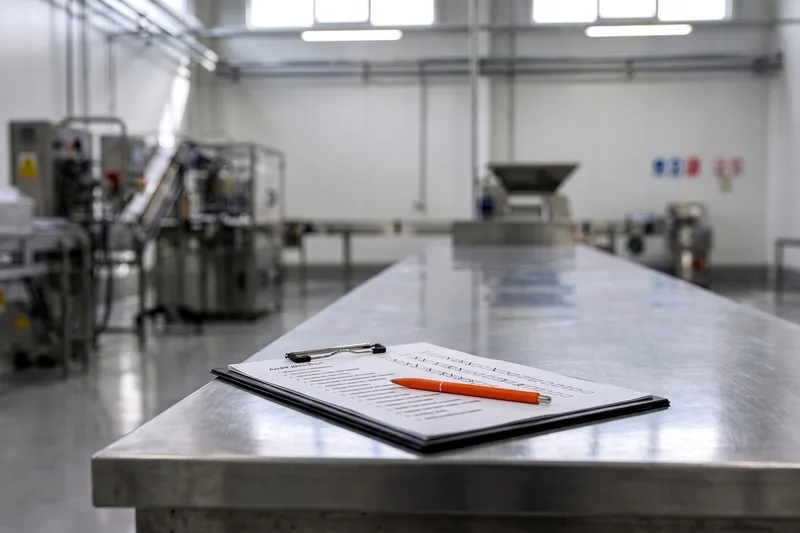
Whichever scheme your plant is audited against, pest control is one of the sections every auditor opens. They are not looking for a site with no pests at all. They want to see a programme that is planned, carried out as planned, written down, and acted on when something is found.
Most findings in this section come from the paperwork, not from a mouse running across the floor. Here is what is usually asked for, and what “ready” looks like.
1. A site plan with every station on it
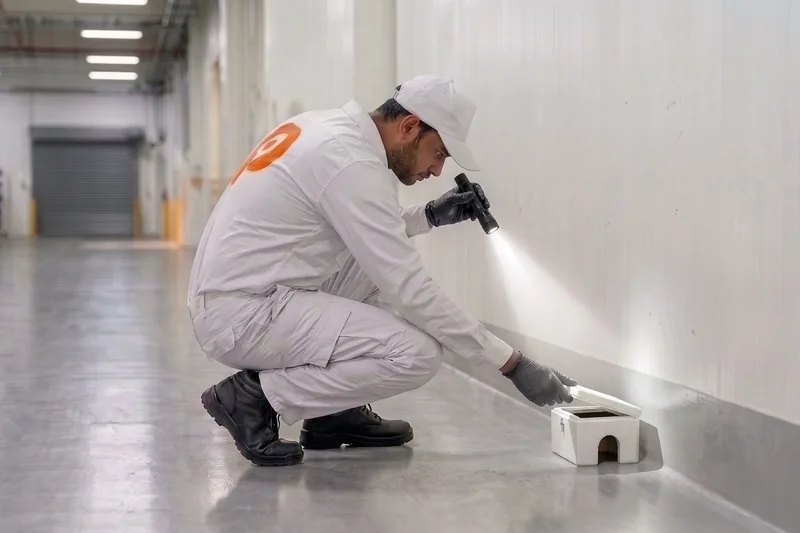
The auditor will ask for a plan of the site showing every bait station, rodent box, insect light trap and glue board, each with its own number. Then they will walk the floor and check that the stations they find match the plan.
Ready looks like: a current plan, dated, with numbers that match the labels on the stations. Moved a station last month? The plan should show it.
2. A report for every visit
Every visit your contractor makes should leave a record: the date, the technician, which stations were checked, what was found at each one, what was done, and what the site needs to fix.
Ready looks like: a complete set of visit reports for the audit period, with no gaps between the dates your contract promises. A missing month is one of the most common findings.
3. Proof that every station was actually checked
“All stations checked, no activity” written on a form does not prove much. Auditors increasingly ask how you know each station was really opened.
Ready looks like: a record per station, not per visit. At Pointerz every station carries a QR code, and the technician’s app only opens a station when its code is scanned. That gives a time-stamped record for each one, so a skipped station shows up.
4. Trends, not just reports
A pile of reports is not the same as knowing what is going on. Auditors like to see activity tracked over time: which areas have the most catches, whether flying insect counts rise in summer, whether a problem area improved after action was taken.
Ready looks like: a monthly or quarterly review with charts by area, and a note of what was done about anything rising.
5. Findings that were closed
When a report says “gap under the dispatch door” or “food waste left near the canteen drain”, the auditor will look for what happened next.
Ready looks like: each recommendation with an owner, a date and a sign-off when it was fixed. An open recommendation from six months ago is a finding waiting to happen.
6. What was used, and by whom
Expect to show the list of products used on site, their safety data sheets, and where each is allowed. Poison bait, for example, is generally kept outside, on the perimeter, and not in areas where open food is handled; inside, rodent boxes hold glue sheets or traps instead.
Ready looks like: a product list that matches what the technicians actually carry, the data sheets on file, and your contractor’s details and the training records of the technicians who visit.
7. Insect light traps in the right places
The auditor will check that fly killers are placed away from open food and away from doors where they would draw insects in from outside, and that catch boards and tubes are changed on schedule.
Ready looks like: the light traps on your site plan, a record of each catch board change, and the date the tubes were last replaced.
The week before the audit
- Walk the site with the plan in your hand and check every station number.
- Check that you have a report for every visit in the audit period.
- Go through open recommendations and close what you can.
- Print or download the latest trend report.
- Make sure the product list and data sheets are current.
If your records live in a client portal, most of this is a download, not a search through files. Pointerz clients get their visit reports, findings with photos and a monthly report pack for each location in PDF and Excel, ready to hand to the auditor.